
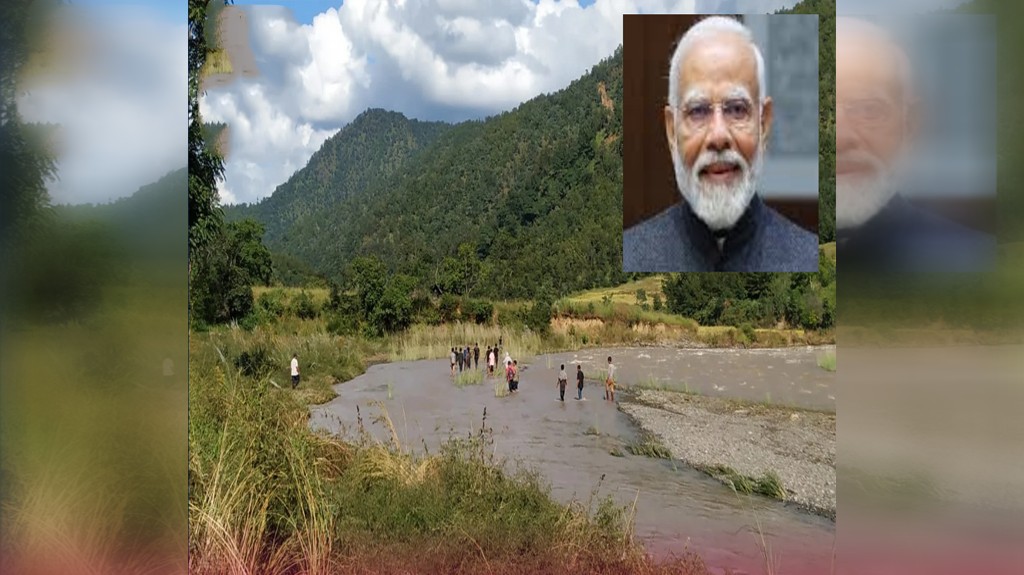
In a strong assertion of indigenous rights and regional concerns, the Thadou Kuki Students’ Union (TKS) has submitted a detailed memorandum to Prime Minister Narendra Modi, demanding an immediate halt to the ongoing Indo-Myanmar border fencing project and the restoration of the Free Movement Regime (FMR) between the two nations.
The move reflects growing unrest among borderland communities, particularly the ethnic tribes with deep ancestral and socio-cultural ties that straddle both sides of the international boundary.
📜 Key Demands in the TKS Memorandum
| Issue | TKS Position |
|---|---|
| Border Fencing | Immediate halt; terming it “divisive and destructive” |
| Free Movement Regime (FMR) | Full restoration of traditional cross-border access |
| Indigenous Rights | Protection of historical and cultural tribal mobility |
| Consultation Process | Urged inclusive dialogue with affected communities |
🗣️ TKS Statement: “Fencing Fragments Our People”
Speaking to the media following the submission, TKS leaders warned that the border fencing initiative threatens to divide indigenous communities, many of whom have kinship, cultural, and economic ties across the India-Myanmar border, particularly in the states of Manipur and Mizoram.
“The border is a colonial imposition. Fencing it now without community consultation will fragment our people and destroy a way of life that has existed for generations,”
— TKS Spokesperson in New Delhi
🔍 Background: Why the Protest?
The Indo-Myanmar border spans approximately 1,643 km, much of it through difficult terrain and inhabited by various tribal groups. The Free Movement Regime (FMR), established through bilateral agreement, has historically allowed people living within 16 km on either side of the border to travel across with minimal restrictions.
However, in recent years, citing security concerns, illegal migration, and insurgent activity, the Indian government began pushing for complete fencing and stricter enforcement—leading to strong opposition from local communities.
⚠️ Call for Inclusion and Dialogue
TKS criticized the government for allegedly proceeding with the fencing without prior consultation with tribal stakeholders, calling the move “undemocratic and insensitive to indigenous realities.” The student body called on PM Modi to ensure that any future decision is taken through a transparent and participatory process.
🕊️ Peaceful Resistance Ahead?
TKS has not ruled out peaceful demonstrations, mobilizations, and legal measures if their demands are not addressed. They emphasized their commitment to non-violent democratic resistance in defense of tribal rights, identity, and territorial heritage.
📌 What They Seek from PM Modi:
-
Immediate suspension of all border fencing activities
-
Reinstatement of the Free Movement Regime (FMR)
-
Community consultations involving tribal leaders and civil society
-
Recognition of trans-border tribal rights under customary law
As tensions rise along India’s northeastern frontier, the TKS memorandum brings into sharp focus the delicate balance between national security interests and indigenous rights, placing the spotlight on the human dimensions of border policy. The ball is now in the Prime Minister’s court as affected communities await a response that is both strategic and sensitive.