
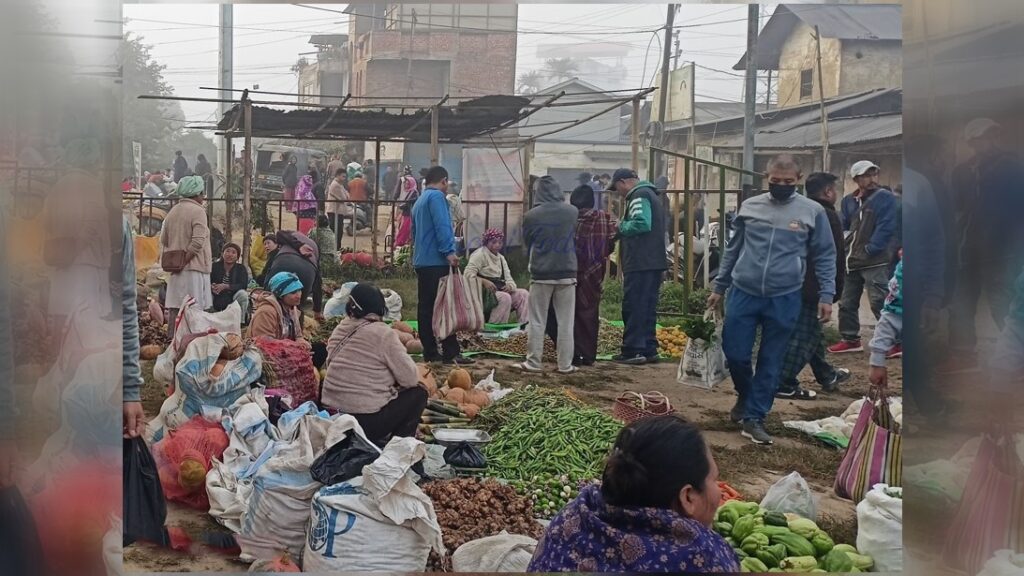
The usually quiet grounds of Kongpal Thoubandong’s Netaji Memorial Club turned into a colourful hub of trade and tradition as the Liangmai Imphal Market opened to the public this week. The community-driven event brought together farmers, artisans, home-based entrepreneurs, weavers, and youth groups in a space designed to celebrate both economic opportunity and cultural identity.
Organisers said the market aims to promote indigenous products, support rural livelihoods, and create a shared platform where local sellers can directly connect with urban consumers.
A Marketplace Rooted in Community
Stalls showcased everything from freshly harvested vegetables and forest produce to traditional Liangmai handwoven shawls, bead accessories, bamboo crafts, smoked meat, tribal snacks, organic spices, and handmade household items.
Visitors moved through the aisles with a sense of curiosity; many said they had never seen this wide a display of Liangmai products in Imphal before.
A member of the organising committee noted,
“This market isn’t just about selling goods. It’s about visibility — about showing the richness of Liangmai craftsmanship and giving our farmers and artisans the recognition they deserve.”
Spotlight on Local Farmers and Women Entrepreneurs
One of the defining features of the market was the strong presence of women-led enterprises. Many stalls were run by mothers’ groups, self-help collectives, and young women selling pickles, fermented products, dried herbs, millet biscuits, and tailoring crafts.
Farmers from nearby hill districts also brought organic turmeric, ginger, wild honey, passion fruits, tubers, and medicinal plants — items that are often difficult to find in urban retail outlets.
Organisers say the market model also helps reduce middlemen, ensuring that every participating seller earns a fairer return from their products.
Cultural Showcases Add a Vibrant Touch
Beyond commerce, the market featured cultural demonstrations, including:
live weaving sessions
bamboo craft shaping
storytelling on Liangmai history
traditional food tasting corners
A small performance segment saw youth groups presenting folk songs and drum rhythms that drew a cheering crowd.
Community hopes the event becomes regular
Residents of Kongpal Thoubandong welcomed the initiative, saying it energised the local space and brought meaningful engagement to the community ground. Many sellers expressed hope that the market would become a monthly or seasonal event.
The organising team plans to expand the next edition with workshops on branding, packaging, digital payments, and small business registration so that local entrepreneurs can strengthen their market presence even beyond the event.
“The goal is simple,” an organiser said.
“Celebrate who we are — and support people who create, grow, and work with their hands.”