
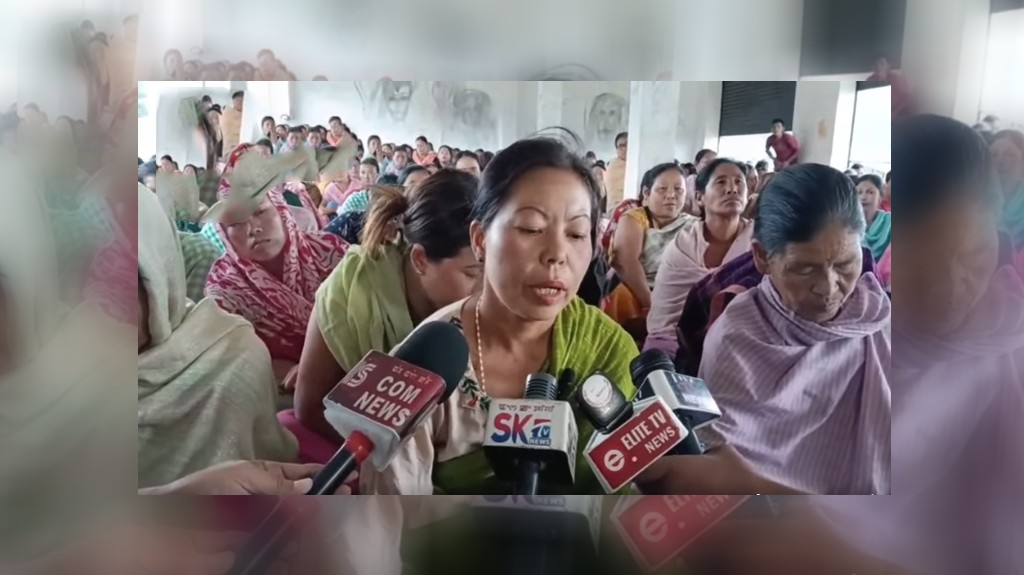
In a controversial twist to Manipur’s ongoing ethnic crisis, displaced residents of Charhazare village—who had already lost their homes and livelihoods—now face First Information Reports (FIRs) filed by individuals from the Kuki community. This development has sparked outrage and confusion, as video and eyewitness evidence clearly establish the Charhazare residents as victims of violence and arson during the conflict.
Background: Charhazare Village Displacement
Charhazare, a village located on the periphery of the conflict zone in the Imphal-Kangpokpi border area, was burned down during the early phase of the ethnic unrest that erupted in May 2023. Several Meitei families were forced to flee overnight, taking refuge in relief camps with no time to salvage belongings or property.
Despite their visible status as internally displaced persons (IDPs), recent legal action has complicated their situation.
The FIR Controversy
According to reliable sources, multiple Kuki individuals have filed FIRs against Charhazare villagers, alleging criminal conspiracy, arson, and other charges. The FIRs reportedly include the names of youths and elders currently residing in relief camps, some of whom were reportedly injured during the attacks.
Community Reaction and Evidence
Eyewitnesses, local civil society organisations, and social media footage point to Charhazare villagers as victims, not perpetrators. Visuals show burning homes, elderly residents being rescued by volunteers, and women with children fleeing under gunfire.
Key Details of the Case
| Element | Details |
|---|---|
| Village Affected | Charhazare (Imphal District) |
| Date of Displacement | May 2023 |
| Number of Displaced Families | Over 60 families |
| FIR Filed By | Individuals from the Kuki community |
| FIR Charges | Alleged involvement in violence, arson, conspiracy |
| Contradictory Evidence | Videos, eyewitness accounts, relief camp records |
Civil Society Outrage
Multiple valley-based Civil Society Organisations (CSOs) and human rights defenders have condemned the move, calling the FIRs a “mockery of justice” and accusing local law enforcement of bias or political pressure.
“The FIRs against Charhazare residents are not only baseless but insulting. These people lost everything — homes, land, dignity — and now they are being painted as criminals,” said a representative from the Meitei Coordinating Committee for Relief and Justice.
Legal and Political Response
While no arrests have been reported as of now, legal teams representing the displaced villagers have submitted counter-affidavits and are demanding the FIRs be quashed immediately.
The state government has yet to issue a formal statement, but sources suggest that a judicial review of all such FIRs may soon be undertaken to prevent further victimization of displaced communities.
Conclusion
The FIRs against Charhazare residents represent a troubling legal turn in a conflict already marred by deep mistrust and trauma. For a society trying to heal, ensuring that victims are not re-victimized through the legal system is essential — not just for justice, but for peace and reconciliation in Manipur.