
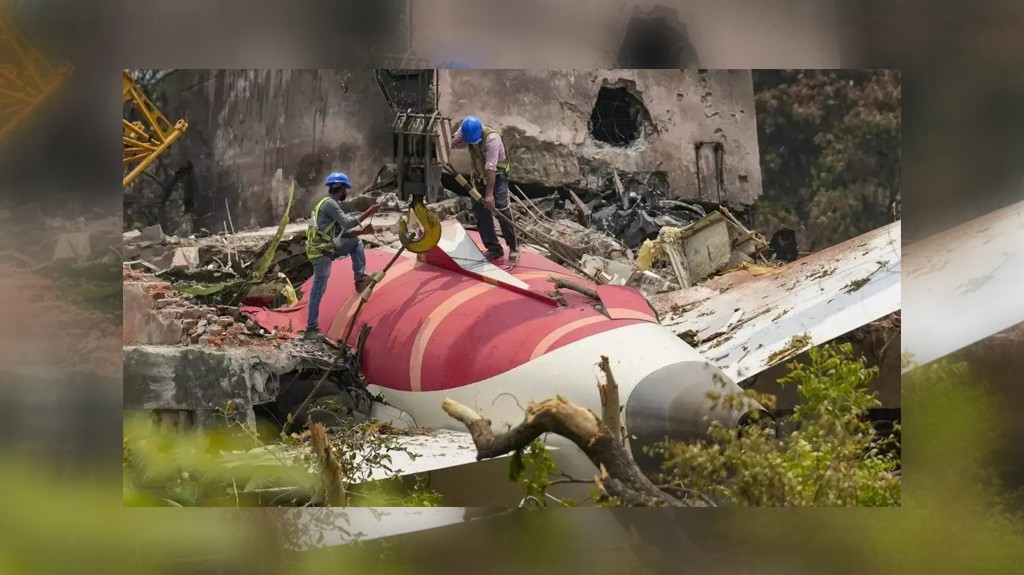
A chilling revelation has emerged from the preliminary investigation into last month’s catastrophic Air India flight crash, which claimed the lives of 241 people on board and 260 on the ground, making it the deadliest air disaster involving a Boeing 787-8 Dreamliner to date.
According to the 15-page preliminary report released by the Aircraft Accident Investigation Bureau (AAIB), the fuel supply to both engines was cut off just seconds after takeoff, leading to complete engine failure and power loss during the initial climb.
Key Preliminary Findings
| Aspect | Details |
|---|---|
| Flight Details | Air India flight from Ahmedabad to London Gatwick |
| Aircraft Model | Boeing 787-8 Dreamliner |
| Fatalities | 241 onboard + 260 on ground = 501 total deaths |
| Crash Site | Medical hostel complex, shortly after takeoff from Ahmedabad |
| Date of Crash | June 2025 (exact date withheld pending final report) |
| Fuel System Status | Both engine fuel switches moved from RUN to CUTOFF mid-air |
| Pilot Communication | CVR recorded confusion: “Why did you cut off (the fuel)?” — “I didn’t.” |
| Emergency Indicators | Ram Air Turbine (RAT) deployed, confirming total power loss |
| Investigation Authority | Aircraft Accident Investigation Bureau (AAIB), India |
| Manufacturer Response | Boeing deferred comment, citing ICAO Annex 13 |
| Airline Response | Air India offered condolences, cooperating fully with investigation |
Timeline of Events: Seconds to Disaster
The aircraft lifted off normally but lost thrust as both fuel cutoff switches were inexplicably triggered within a second of each other.
Cockpit voice recordings reveal one pilot questioned the fuel cutoff, indicating it was unintentional.
Moments later, the plane plunged and struck a residential medical complex near the airport.
CCTV footage from the airport showed the Ram Air Turbine deploying, confirming power loss.
No Safety Directives Issued Yet
Despite the seriousness of the incident, the AAIB has not yet issued any safety recommendations specific to the Boeing 787-8 aircraft or its GE GEnx-1B engines. The wreckage has been preserved for further forensic and systems analysis, and the final report is expected within 12 months.
Official Statements
Air India issued its first official statement since the release of the preliminary report:
“We extend our heartfelt condolences to the families affected by this tragedy. Air India continues to provide full cooperation to the ongoing investigation. Given the sensitive and technical nature of the matter, we defer further comment to the authorities.”
Boeing also refrained from commenting directly, citing ICAO’s Annex 13 protocol, which places investigative authority with the state of occurrence — in this case, India.
A Model’s First Fatal Crash
This crash marks the first fatal accident involving the Boeing 787-8 Dreamliner, a widely used wide-body aircraft globally praised for fuel efficiency and safety — until now. Aviation experts are closely watching for any broader implications or design reviews.
As the global aviation industry awaits the final conclusions, this tragedy stands as a stark reminder of how moments of unexplained cockpit anomalies can lead to catastrophic consequences.