
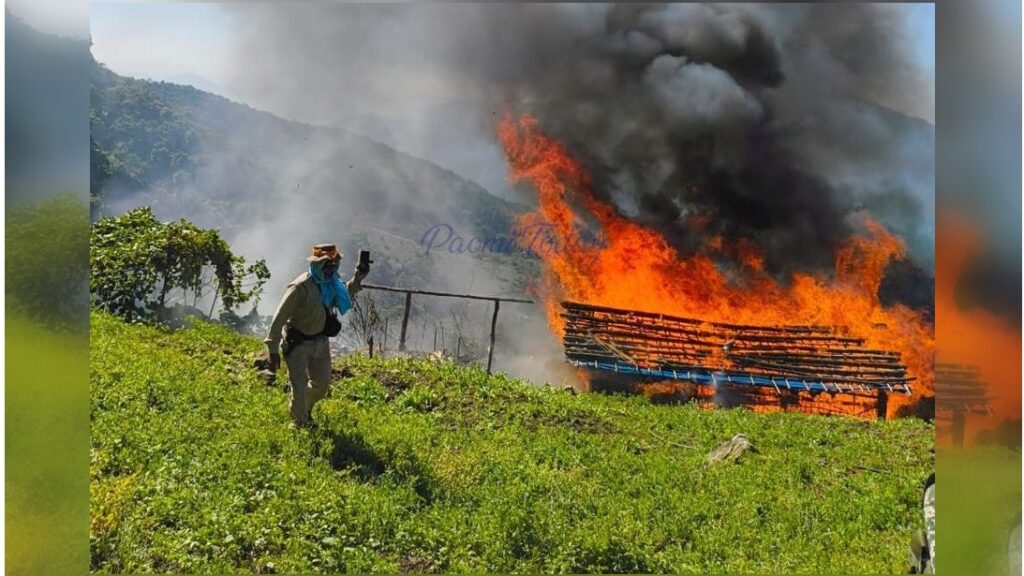
In one of the largest anti-narcotics operations of the season, security forces destroyed illegal poppy plantations spread across approximately 56 acres in two separate zones of Kangpokpi district. The targeted locations included the adjoining areas between Thonglang Akutpa and Songjang hill ranges, as well as fields near Awlmun village under Kangchup Police Station.
The destruction drive forms part of the ongoing state-wide efforts to curb narcotic crop cultivation under Manipur’s intensified War on Drugs campaign.
Widespread Cultivation Cleared
Teams deployed in the hill ranges conducted extensive field searches before uprooting and destroying the poppy plants. Officials noted that the scale of cultivation—spread across steep and remote terrain—indicated organised activity rather than isolated local farming.
During the operation, forces also dismantled 19 makeshift farm huts believed to have been used by cultivators for temporary shelter during the planting and harvesting season.
Supplies Seized and Destroyed
Along with the poppy crops, personnel seized and destroyed:
10 bags of fertiliser
9 sacks of salt
According to officials, these materials are typically used to enhance soil conditions and increase the yield of opium poppy plants. Their presence suggested that the fields had been tended for weeks, if not months.
A senior officer involved in the operation said the findings pointed to “large-scale, systematic cultivation,” adding that the use of makeshift huts and stored supplies demonstrated sustained activity in the area.
Strategic Locations Under Watch
The Thonglang Akutpa–Songjang stretch and the Awlmun area have been identified as vulnerable pockets for narcotic crop cultivation due to their remote, rugged terrain and limited surveillance access. Security forces have been intensifying patrols in these locations, supported by district administration and local units.
Officials confirmed that follow-up monitoring will continue to prevent replantation ahead of the next sowing cycle.
Focus on Prevention and Sustainable Alternatives
The district administration has reiterated that enforcement operations will be complemented by alternative livelihood programmes for affected or vulnerable communities. These include promotion of legal crops such as ginger, turmeric, maize, and horticultural produce under various state and central schemes.
| Items Destroyed | Quantity |
|---|---|
| Poppy cultivation area | 56 acres (approx.) |
| Farm huts | 19 |
| Fertiliser bags | 10 |
| Sacks of salt | 9 |
Officials stressed that combating the narcotics economy requires a mix of strict enforcement, awareness drives, and sustained economic support for communities living in poppy-growing regions.
Community Cooperation Urged
Authorities have appealed to residents of nearby villages to report any suspicion of re-cultivation or movement of materials related to narcotic crops. Public participation, they said, remains a key part of achieving lasting success in the campaign against illegal poppy cultivation.