
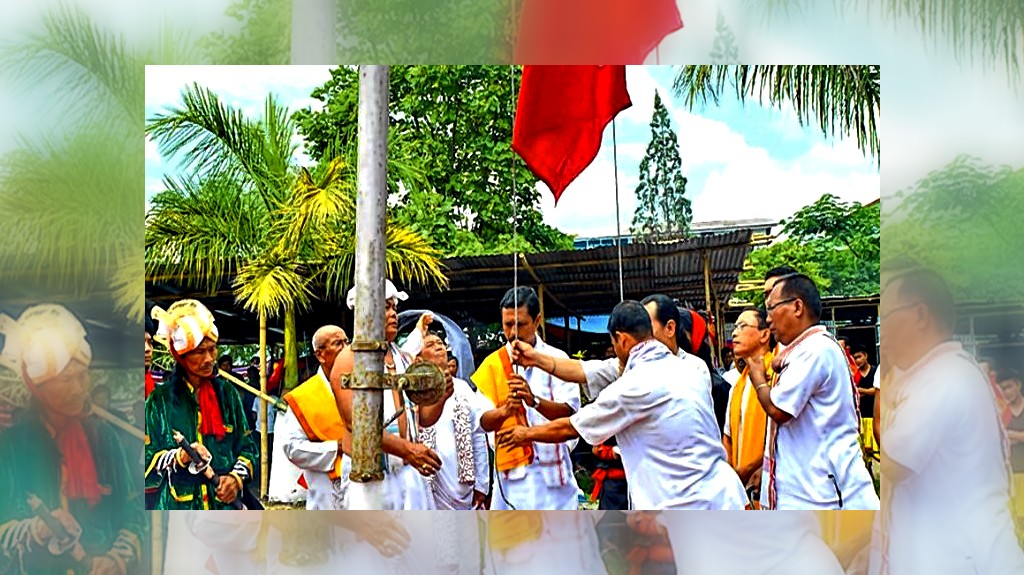
On August 14, 1947, as British rule ended in the Indian subcontinent, Manipur regained political autonomy. Under the Manipur State Constitution Act of 1947, Maharaja Bodhachandra led the state’s own democratic framework.
This sovereignty, born from centuries of self-rule and resistance—including the 1891 Anglo-Manipur War—remained intact until a merger agreement in 1949 brought Manipur into Indian administrative control.
Why Aug 14 Holds Significance
August 14 predates India’s August 15 Independence Day by a day, making it a distinct moment in Manipur’s own history. Local historians and civil society leaders view it as the state’s true Independence Day.
Civil groups like AMUCO and the United Committee Manipur (UCM) commemorate it by hoisting the traditional Ibudhou Pakhangba-flag, and conducting ceremonies across hundreds of locations statewide.
Patriotic Commemoration
Events include flag hoisting, tributes to freedom fighters, cultural programs, and public gatherings.
Importantly, these observances serve not just as remembrance but as an assertion of Manipur’s unique identity and its historical struggle for sovereignty.
Context & Contemporary Relevance
Observing August 14 is not an anti-India statement. Many participants emphasize that it strengthens historical awareness and regional pride, not dissent.
This tradition underlines broader discussions on Manipur’s pre-merger status and autonomy that continue to shape political dialogue today.
Summary Table
| Aspect | Details |
|---|---|
| When | August 14 annually |
| What | Commemoration of Manipur’s sovereignty restoration post-British rule |
| History | Manipur regained autonomy via its 1947 Constitution Act |
| Significance | Acknowledges Manipur’s unique political history and reinforces cultural identity |
| How Celebrated | Flag hoisting, tributes, cultural events, speeches in multiple communities |