
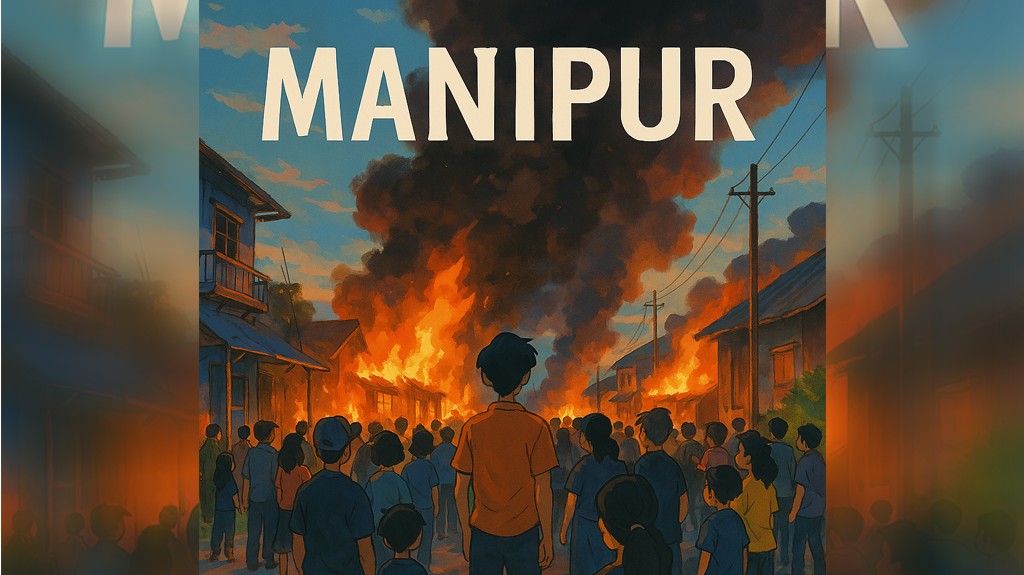
A deeply emotional appeal has emerged from Manipur’s internally displaced persons (IDPs), highlighting the pain and indignity of not being allowed to return to their ancestral land — even in death.
A message that has gone viral on local social media reads:
“At least in death, let IDPs be cremated in their ancestral land. Displaced in life — must they be denied dignity even in death?”
This plea encapsulates the silent suffering of thousands uprooted by the ongoing ethnic unrest in the state. The message, shared under the banner “Voice of IDPs”, reflects the psychological toll the prolonged displacement is taking on families forced to live in temporary relief camps for over a year.
The Reality of Displacement in Manipur
| Key Statistics | Details |
|---|---|
| Number of Displaced Persons | Over 60,000 (as of mid-2025) |
| Duration of Displacement | Since May 2023 ethnic clashes |
| Shelter Type | Relief camps, school buildings, makeshift tents |
| Major Affected Districts | Churachandpur, Kangpokpi, Imphal West, Imphal East, Bishnupur |
Beyond Physical Suffering: The Emotional Crisis
While the physical hardships faced by the IDPs — lack of privacy, loss of livelihood, disrupted education, and inadequate healthcare — have been documented, the psychological and emotional trauma remains underreported.
The recent plea for the right to be cremated in their homeland reflects not just a logistical concern, but a cultural and spiritual cry for dignity.
“It is heartbreaking that families are not even able to perform last rites according to tradition, due to the inability to return to their villages,” said a local relief volunteer in Imphal East.
Dignity in Death: A Human Right
Social activists and human rights defenders have called upon both the state and central governments to intervene and create safe channels for the performance of final rites in ancestral lands, even if immediate return for the living is not yet possible.
“Displacement strips people of many things — but to be denied even the right to bury or cremate your loved ones on your own land is a cruelty no civilized society should tolerate,” said a retired professor and civil society spokesperson.
What Can Be Done?
Humanitarian workers and community leaders are urging for the following:
Safe corridors for final rites in native villages under protective security
Dignified burial or cremation protocols for IDPs in camps until return is possible
Mental health and trauma support for bereaved families
Accelerated political solutions for the return and rehabilitation of IDPs
Conclusion
The message from the Voice of IDPs has sparked fresh outrage and introspection in Manipur’s civil society. As the conflict drags on with no resolution in sight, the question remains — must the displaced continue to suffer in life and be denied peace even in death?