
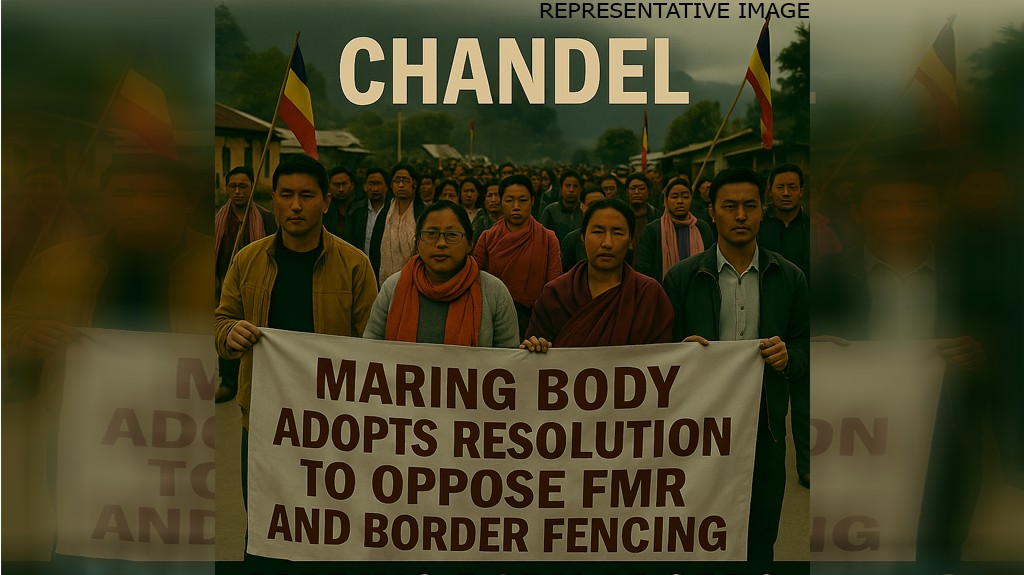
In a decisive move reflecting growing indigenous unease, a prominent Maring community body in Chandel district has passed a resolution opposing the Free Movement Regime (FMR) and the ongoing India-Myanmar border fencing project. The resolution, adopted during a community meeting held earlier this week, underscores deep concerns about the potential impact on ancestral land, tribal unity, and traditional cross-border ties.
What Is FMR and Why It’s Being Opposed?
The Free Movement Regime (FMR) is an agreement between India and Myanmar that allows citizens of either country living within 16 km of the international border to cross over without a visa for up to 14 days. While it was meant to accommodate ethnic kinship across the border, many tribal groups now fear the system is being misused for illegal migration, arms smuggling, and narcotics trafficking — further destabilizing the region.
Key Points of the Maring Resolution
| Resolution Highlights | Details |
|---|---|
| Opposition to FMR | Demanded complete revocation citing national security and demographic concerns |
| Rejection of Border Fencing | Said fencing divides ancestral land and disconnects tribal kinship ties |
| Call for Indigenous Rights Recognition | Urged the Centre to consult tribal stakeholders before implementing border policy |
| Appeal to Manipur Government | Asked CM and MLAs to intervene to protect tribal land and identity |
Statement from Maring Civil Society Representative
A senior representative of the Maring community stated:
“Our people have lived and moved freely across this land long before borders existed. Fencing and restrictive regimes are not just physical barriers — they are erasures of our history, kinship, and freedom.”
Broader Tribal Sentiment
The Maring body joins other tribal organizations in Manipur — including those from the Kuki-Zo and Naga communities — that have also raised objections to the border fencing initiative, particularly in areas where communities live astride the border with strong socio-cultural ties.
Strategic & Security Context
While the fencing aims to enhance national security and curb cross-border militancy, critics argue it has disregarded the voices of indigenous people. The government maintains that fencing is vital to stop the flow of arms, drugs, and illegal migrants from Myanmar.
| Government View | Indigenous Community View |
|---|---|
| Fencing ensures national security | Fencing disrupts ethnic ties and land continuity |
| FMR enables ethnic outreach | FMR exploited by outsiders and insurgents |
| Central authority needs clear demarcation | Local voices ignored in planning and implementation |
What’s Next?
The Maring resolution has been submitted to state and central authorities. Tribal leaders have warned that peaceful protests and legal actions may follow if their concerns are not addressed. The matter is expected to be discussed in upcoming tribal coordination forums.
Conclusion
The resolution adopted by the Maring body reflects a growing rift between national border policy and local tribal realities in India’s northeastern frontier. As the Centre moves forward with fencing the porous India-Myanmar border, balancing security needs with indigenous rights remains the critical challenge.