
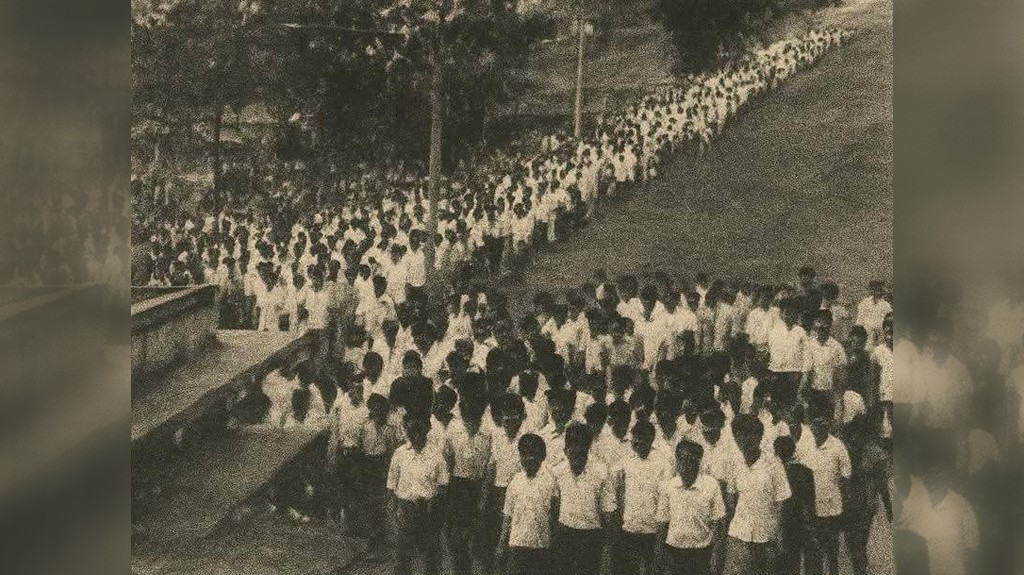
Every year on August 27, Manipur observes Hunger Marchers’ Day, a solemn occasion that recalls the 1965 people’s uprising against rice scarcity, a defining moment in the state’s political and social history.
The 1965 Agitation
In the mid-1960s, Manipur was reeling under an acute shortage of rice, the staple food of the state. The crisis worsened due to policies that allowed rice to be exported outside the state, even as local people faced empty granaries.
On August 27, 1965, thousands of citizens, including students and workers, marched through the streets of Imphal demanding immediate action. Their protest highlighted not only hunger and scarcity but also deep frustrations with governance, neglect, and inequality.
The agitation, later remembered as Hunger Marchers’ Day, became a turning point, forcing authorities to confront the realities of food insecurity and people’s survival needs.
Why It Matters Today
Hunger Marchers’ Day is not just about remembering a historical protest; it is about recognising how the struggle for food rights and justice continues to shape Manipur’s collective identity.
Scholars often describe the 1965 uprising as one of the earliest mass movements in the state that connected everyday hardships—like the availability of rice—with broader political demands. For many, it was an awakening moment that tied survival with dignity.
Even today, the observance serves as a reminder that access to food remains a fundamental human right, and that governance must always prioritise people’s basic needs before profit or politics.
Observance in 2025
This year, social and cultural organisations across the state are marking Hunger Marchers’ Day with public talks, memorial programmes, and awareness campaigns. Flowers and tributes were offered at memorial sites, while student groups held seminars to discuss the lessons of 1965 in the context of current challenges such as displacement, unemployment, and rising food prices.
Community leaders stressed that the legacy of Hunger Marchers’ Day should inspire present and future generations to uphold accountability, ensure fair distribution of resources, and protect the most vulnerable.
A Living Legacy
For Manipur, Hunger Marchers’ Day is both history and a continuing struggle. It reminds the people that hunger is not only a matter of food but also of justice, governance, and dignity. The sacrifices of those who marched in 1965 remain etched in collective memory as a symbol of courage and resilience.
As Manipur reflects on this day, it becomes clear that remembering the past is also about shaping a more secure and equitable future.