
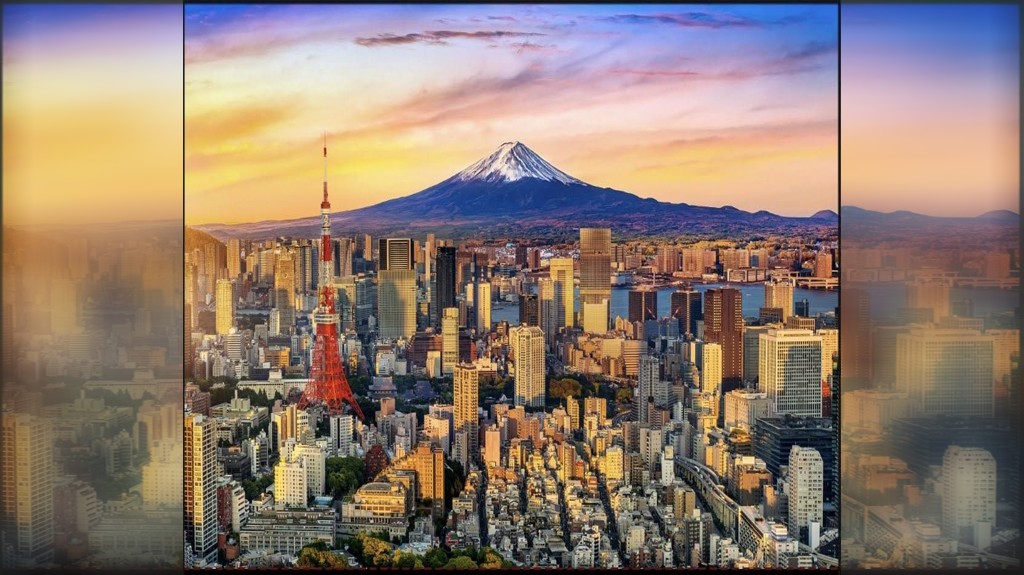
Japan, a nation often admired for its cutting-edge urban design and efficiency, faces a unique geographical challenge: nearly three-quarters of its landmass is mountainous, leaving only a small fraction available for farming and urban development. According to geographic and demographic data, about 73–77% of Japan is covered by mountains, which significantly limits habitable and arable space.
🏔️ Mountains Dominate, Cities Compress
With only 12% of Japan’s land usable for agriculture and a mere 3% dedicated to urban development, the country has little choice but to pack its population into the limited flatlands along the coast. The result? A staggering 93% of the population lives in densely crowded coastal cities, leading to some of the highest urban population densities in the world.
One of the most striking examples is the Kantō Plain, home to Tokyo, the world’s most populous metropolitan area. In some urban pockets here, population density exceeds 6,000 people per square kilometer, making efficient planning not just desirable but essential for daily life.
📊 Japan’s Land Use: A Snapshot
| Land Use Category | Percentage of Total Land |
|---|---|
| Mountainous Terrain | 73–77% |
| Agricultural Land | ~12% |
| Urban/Residential Use | ~3% |
| Population in Coastal Cities | ~93% |
🌆 Urban Pressure and Innovation
This geographic squeeze has driven Japan to innovate in vertical architecture, transportation, and land use efficiency. Tokyo, Osaka, and Yokohama are models of urban engineering, with high-rise apartment blocks, layered transit systems, and underground commercial centers designed to make every square meter count.
However, the pressure has also created challenges—skyrocketing real estate prices, urban heat islands, and limited green spaces. Planners are now focused on decentralization, encouraging growth in regional cities, and reclaiming land through projects like Tokyo Bay’s man-made islands.
🧭 Living Between Mountains and the Sea
Japan’s population distribution isn’t just a matter of planning—it’s shaped by necessity. With volcanic ranges, steep valleys, and earthquake-prone zones, much of the country remains uninhabitable or unsuitable for large-scale farming or development.
Yet, despite these constraints, Japan remains a global leader in urban resilience, proving that limited space doesn’t have to limit innovation.
🗾 Conclusion
Japan’s mountainous geography has forced its population to cluster tightly along the coasts, creating some of the world’s most crowded yet functional urban environments. As the nation continues to face aging demographics and climate threats, its ability to adapt and rethink land use will be central to its future.