
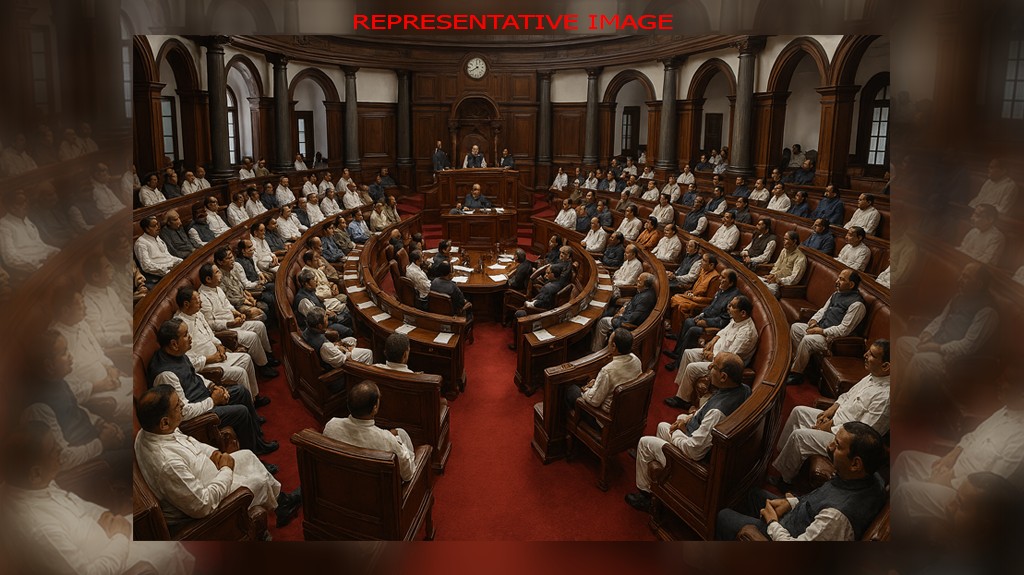
The Rajya Sabha has officially passed a resolution extending President’s Rule in Manipur, deepening concerns over the prolonged political vacuum and democratic paralysis in the conflict-ridden northeastern state.
The decision follows the Union Cabinet’s earlier recommendation, citing persistent law and order concerns and the absence of a conducive environment for holding elections or restoring a popular government.
Context: Why President’s Rule Was Imposed
President’s Rule was first imposed in Manipur in early 2024 after the state government failed to maintain control over a spiraling ethnic conflict between the Meitei and Kuki-Zo communities. Since then, the state has been under direct control of the Centre.
With fresh elections repeatedly postponed and no reconciliation process yielding concrete results, the Centre has argued that the extension is necessary to stabilize the region and prevent further escalation.
What This Means Politically
This move has sparked strong reactions from several quarters:
| Stakeholder | Response |
|---|---|
| Opposition Parties | Called it a “mockery of democracy” and “denial of popular mandate” |
| Local Civil Societies | Expressed frustration, demanding early polls and restoration of elected govt |
| BJP Leadership | Maintains the extension is “unfortunate but necessary” |
| Security Agencies | Continue to cite volatility and intelligence reports of armed group activity |
Why It Matters
Here’s the thing: This isn’t just about bureaucratic control. Manipur has been without an elected government for well over a year. With each passing month, disillusionment is growing among citizens who feel increasingly alienated from both state and central leadership.
The extension also delays any possibility of a political resolution through democratic means — and that’s risky. When governance gets too far removed from the people, anger turns into unrest.
What’s Next
Unless there’s a significant shift — either in the security scenario or political will — there’s no timeline yet for fresh elections. Sources within the Ministry of Home Affairs suggest the Centre is monitoring the situation quarterly but won’t push elections without a “favourable security and administrative assessment.”
Meanwhile, both civil society groups and regional political outfits have warned that continued central control will only deepen alienation and mistrust in the democratic process.