
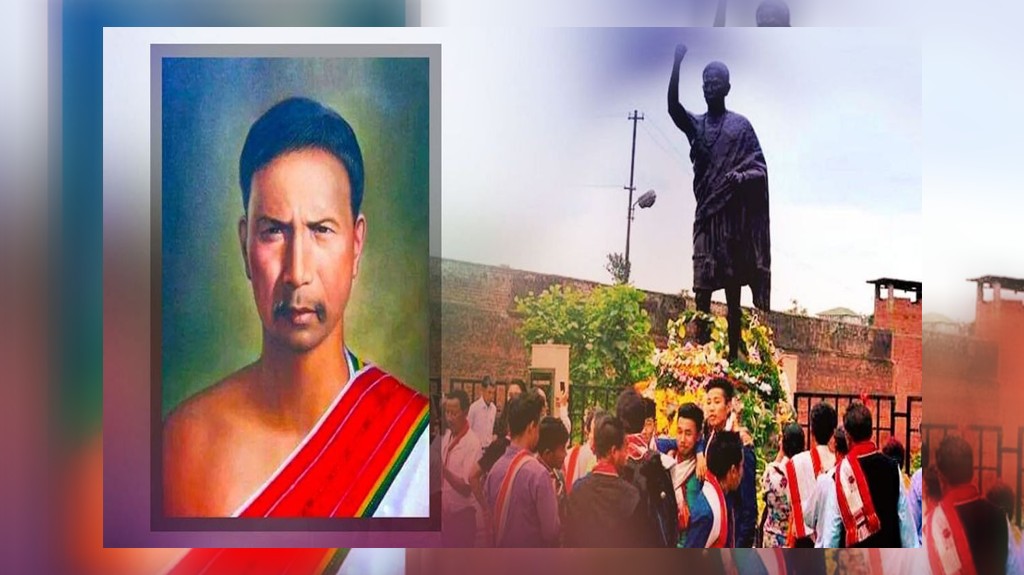
On this day, 94 years ago, Manipur lost one of its most fearless sons—Haipou Jadonang (1905–1931). A visionary leader, spiritual reformer, and freedom fighter, Jadonang remains a towering figure in the history of Manipur, particularly for the Zeliangrong community and the wider Northeast. His sacrifice against colonial oppression continues to resonate as a guiding light for justice, unity, and self-determination.
A Life for the People
Born in Tamenglong district, Jadonang emerged as both a spiritual and political leader at a time when colonial exploitation and social inequalities weighed heavily on his people. He mobilized the Zeliangrong community not only through religious reform but also through the call for social justice, cultural revival, and resistance to foreign rule.
Defiance Against Colonial Rule
In the 1920s, Jadonang organized movements against British taxation and domination. His vision extended beyond his community—he dreamed of a united, self-reliant land, free from exploitation. This made him a target for colonial authorities, who viewed his influence as a threat.
In 1931, he was arrested and executed by hanging in Imphal. Yet, his death ignited greater determination among his followers, especially his disciple Rani Gaidinliu, who later carried forward his movement for self-rule and cultural assertion.
Enduring Legacy
Ninety-four years later, Haipou Jadonang is remembered not just as a rebel against colonial authority but as a symbol of resilience and unity. His struggle continues to inspire new generations in Manipur and across Northeast India.
| Key Contributions | Impact |
|---|---|
| Spiritual & social reform | Revived cultural identity of Zeliangrong people |
| Anti-colonial resistance | Inspired movements against British rule |
| Unity & justice | Advocated solidarity across communities |
| Mentor to Rani Gaidinliu | Sparked continuation of resistance |
A Guiding Light
Every year, communities across Manipur and Nagaland pay tribute to Jadonang with cultural events, memorial services, and reflections on his teachings. His belief in justice and unity remains relevant in today’s context, where harmony and collective progress are vital.
As one local elder expressed during a commemorative gathering: “Jadonang’s sacrifice was not for a single community—it was for generations to come. His dream of unity remains our shared responsibility.”
Ninety-four years on, the flame of Haipou Jadonang’s struggle continues to burn bright.