
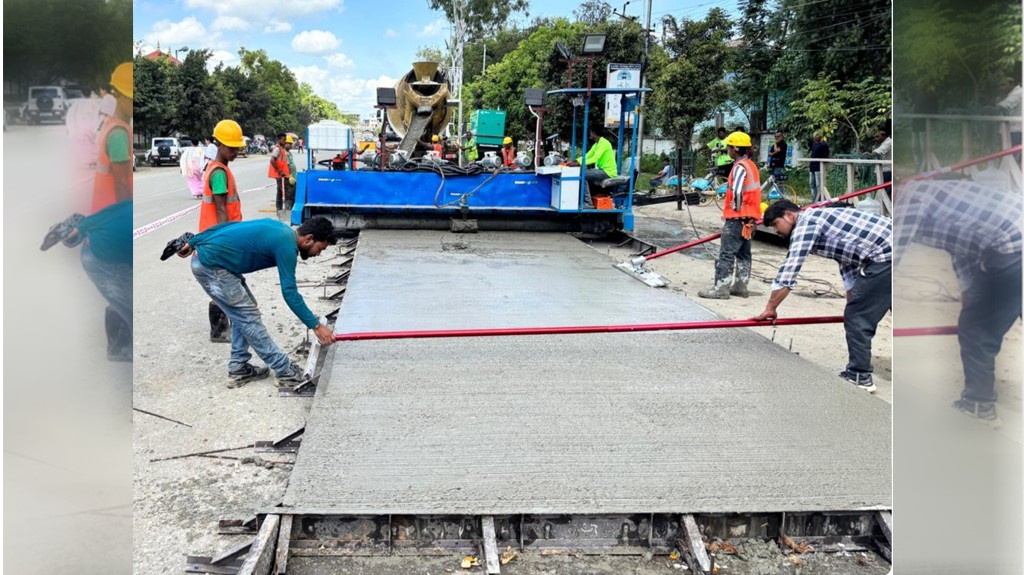
Manipur has taken a pioneering step in modern road construction by introducing Short Panel Concrete (SPC) technology under its Rigid Pavement Project, making it the first state in the Northeast and the second in India, after Maharashtra, to adopt this advanced method.
What Makes SPC Technology Different?
The SPC approach involves laying 170 mm thick M40 grade short panel concrete over a 75 mm bituminous concrete base layer. Compared to traditional road construction, this technology significantly enhances durability and reduces long-term maintenance. Roads built with SPC are designed to withstand heavy traffic, minimize cracking, and extend their service life, making them ideal for urban hubs like Imphal.
First Rollout in Imphal East
The Palace Compound Road in Imphal East has become the testing ground for this innovation. The project is being executed by AMR India Limited, Hyderabad, with the Public Works Department (PWD), Manipur serving as the implementing agency. Officials emphasized that this pilot initiative could pave the way for similar works across the state.
Why It Matters
Manipur’s roads are particularly vulnerable to heavy monsoons, soil instability, and high vehicular pressure. The adoption of SPC technology addresses these long-standing challenges while aligning with the broader vision of Imphal Smart City.
Key Benefits of SPC Roads:
| Benefit | Impact |
|---|---|
| Durability | Roads last longer, reducing cracks and potholes |
| Cost-Efficiency | Lower maintenance and repair expenses over time |
| Speed of Work | Faster execution compared to conventional methods |
| Smart City Fit | Supports sustainable and resilient infrastructure goals |
Looking Ahead
Officials from PWD stated that if successful, SPC technology could be extended to other urban roads and highways in the state, positioning Manipur as a leader in innovative infrastructure within the Northeast. The move is also seen as a strong step toward reducing recurring repair costs, which often strain state resources.
“This is not just about a single road,” a senior PWD official remarked. “It’s about building smarter, longer-lasting infrastructure that matches the needs of a growing city.”