
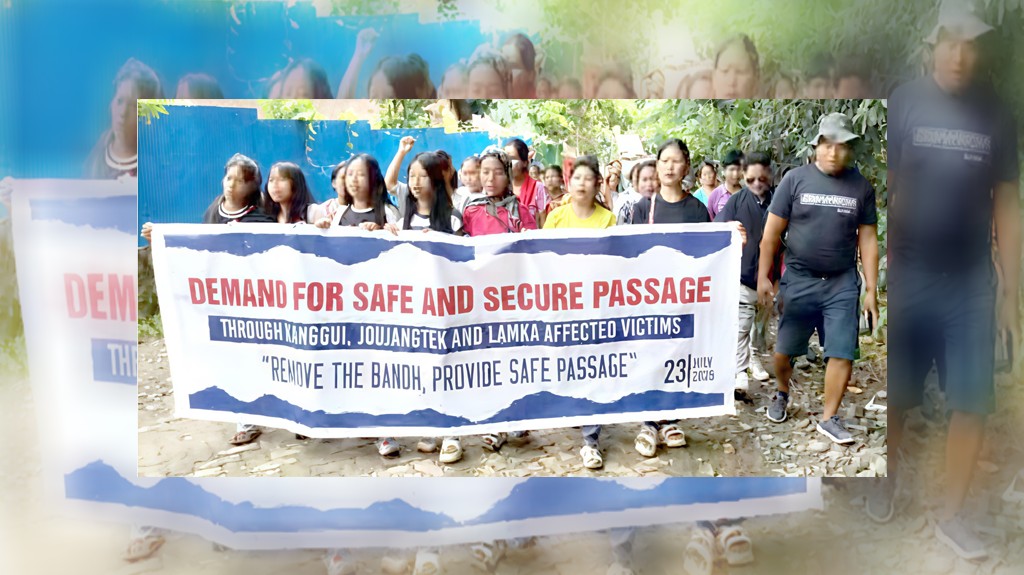
Kuki-Zo Women Demand Safe Passage Through Naga-Dominated Areas in Manipur

The Kuki‑Zo community in Manipur is calling for free and safe transit through Naga-dominated hill zones — a demand rooted in recent ethnic tensions and restrictions on movement.


🚧 What’s at the heart of the conflict?

Shutdown by Naga groups: The Foothills Naga Coordination Committee (FNCC) has imposed an indefinite ban on the movement of Kuki‑Zo people through Naga foothill areas since July 18. The protest objects to Kuki-upgraded roads (notably the German-Tiger route) built without Naga consent and perceived as encroachment on ancestral land .

Kuki‑Zo plea: The Kuki‑Zo Council (KZC) has repeatedly urged FNCC to lift the shutdown, arguing that safe passage is critical. They describe the German‑Tiger Road as a vital humanitarian route built due to blocked access through Meitei areas after the May 2023 violence .


📋 Quick overview:

Stakeholder Position Demand/Action
FNCC (Naga) Opposes Kuki-road construction in ancestral territories Maintain shutdown; assert territorial rights
KZC (Kuki‑Zo) Urges reopening passage through Naga areas Lift shutdown; ensure safe transit

👥 Why this matters

The shutdown affects daily life: travel, trade, and access to essential services are disrupted for Kuki‑Zo communities.

Tensions run deep: root causes include land claims, ethnic identity, and lack of political resolution. Kuki‑Zo groups insist free movement must wait until their political demands are met — like separate administration or constitutional guarantees .

Violence has flared: earlier protests in March and June saw clashes with security forces, injuries among women, and fatalities after attempts to enforce a mandated “free movement” order failed to consider Kuki‑Zo concerns .


🔍 What this means

The Kuki‑Zo petition for safe passage is more than a plea for mobility — it’s a stand for dignity and survival. They argue that being cut off from vital roads worsens their isolation and denies their right to connect. Meanwhile, Naga groups see these routes as a threat to ancestral ownership. The standoff shows how infrastructure, identity, and control over territory are deeply intertwined.


🔭 Where it could go from here

Political dialogue is essential. Both sides need to engage — KZC is already seeking central government assistance for road improvements; FNCC is demanding consent-based dialogue before any development continues.

Neutral mediation, possibly by the Centre, might help navigate these ethnic flashpoints.

Humanitarian concern: For Kuki‑Zo women in particular, restricted movement impacts safety, economic opportunity, and access to education or healthcare.

Leave a Comment

Your email address will not be published. Required fields are marked *

Kuki-Zo Women Demand Safe Passage Through Naga-Dominated Areas in Manipur

The Kuki‑Zo community in Manipur is calling for free and safe transit through Naga-dominated hill zones — a demand rooted in recent ethnic tensions and restrictions on movement.


🚧 What’s at the heart of the conflict?

Shutdown by Naga groups: The Foothills Naga Coordination Committee (FNCC) has imposed an indefinite ban on the movement of Kuki‑Zo people through Naga foothill areas since July 18. The protest objects to Kuki-upgraded roads (notably the German-Tiger route) built without Naga consent and perceived as encroachment on ancestral land .

Kuki‑Zo plea: The Kuki‑Zo Council (KZC) has repeatedly urged FNCC to lift the shutdown, arguing that safe passage is critical. They describe the German‑Tiger Road as a vital humanitarian route built due to blocked access through Meitei areas after the May 2023 violence .


📋 Quick overview:

Stakeholder Position Demand/Action
FNCC (Naga) Opposes Kuki-road construction in ancestral territories Maintain shutdown; assert territorial rights
KZC (Kuki‑Zo) Urges reopening passage through Naga areas Lift shutdown; ensure safe transit

👥 Why this matters

The shutdown affects daily life: travel, trade, and access to essential services are disrupted for Kuki‑Zo communities.

Tensions run deep: root causes include land claims, ethnic identity, and lack of political resolution. Kuki‑Zo groups insist free movement must wait until their political demands are met — like separate administration or constitutional guarantees .

Violence has flared: earlier protests in March and June saw clashes with security forces, injuries among women, and fatalities after attempts to enforce a mandated “free movement” order failed to consider Kuki‑Zo concerns .


🔍 What this means

The Kuki‑Zo petition for safe passage is more than a plea for mobility — it’s a stand for dignity and survival. They argue that being cut off from vital roads worsens their isolation and denies their right to connect. Meanwhile, Naga groups see these routes as a threat to ancestral ownership. The standoff shows how infrastructure, identity, and control over territory are deeply intertwined.


🔭 Where it could go from here

Political dialogue is essential. Both sides need to engage — KZC is already seeking central government assistance for road improvements; FNCC is demanding consent-based dialogue before any development continues.

Neutral mediation, possibly by the Centre, might help navigate these ethnic flashpoints.

Humanitarian concern: For Kuki‑Zo women in particular, restricted movement impacts safety, economic opportunity, and access to education or healthcare.

Leave a Comment

Your email address will not be published. Required fields are marked *